
How to Vet a Minneapolis Roofing Company (Like a Real Estate Agent Would)
Vetting a roofer is a lot like vetting a surgeon: you’re hiring a stranger to do something important that you can’t easily evaluate afterwards, and the difference between good and bad work might not show up for years. The best vetting framework we’ve come across isn’t from the roofing industry at all — it’s the one experienced Twin Cities real estate agents use when their reputation is on the line with every vendor referral.
Here’s that framework, translated into exactly how to vet a Minneapolis roofing company before you sign a contract. Five layers. Each one filters the list further. By the end, you’re choosing between two or three names you’d happily put your own signature on.
Layer 1: The paper trail (how to vet a Minneapolis roofing company on paper)
This is the cheapest, fastest filter, and it eliminates the highest percentage of bad options. Takes about 10 minutes per contractor.
- MN DLI license: Active, in the correct class, no open complaints. See our licensing guide.
- MN Secretary of State filing: Company name matches, business is in good standing, formation date at least 3 years old.
- Insurance certificates: General liability ($1M minimum) and workers’ comp, received directly from the insurance agency.
- BBB profile: Accredited is a plus but not required; the absence of unresolved complaints matters more.
- Manufacturer certifications: Listed on GAF, Owens Corning, or CertainTeed’s own contractor locator, not just on the contractor’s website.
This is where real estate agents start, and it’s where most homeowners quit too early. Every item above can be verified from your phone in a few minutes. If one link in this chain doesn’t hold, the whole contractor disqualifies. That’s the whole point of a filter.
Layer 2: The reputation read
Reviews matter, but aggregate scores lie. This is the layer that separates real estate agents’ vetting from the average homeowner’s. Realtors read reviews the way hiring managers read resumes: looking for the story the star rating is hiding.
- Open the contractor’s Google reviews, sort by lowest-rated, read the worst 10.
- Read how the company responded to each. A defensive, generic, or silent response is more telling than any 5-star.
- Check the BBB profile for closed complaints, not just the rating.
- Do the same on Angi, Facebook, and Yelp.
- Google the company name plus “complaint,” “lawsuit,” and “scam.”
Two numbers matter more than the star rating: the ratio of company responses to reviews (should be above 50%), and the number of 1-star reviews that describe the same problem. Three separate homeowners describing the same failure mode is a pattern, not an outlier. Our how to check a roofer’s reviews walkthrough covers this in detail.
Layer 3: The on-site interview
This is where real estate pros go beyond what most homeowners do. When they’re vetting a contractor they’ll have to recommend for years, they watch the first site visit like a job interview.
Pay attention to the choreography, not just the content:
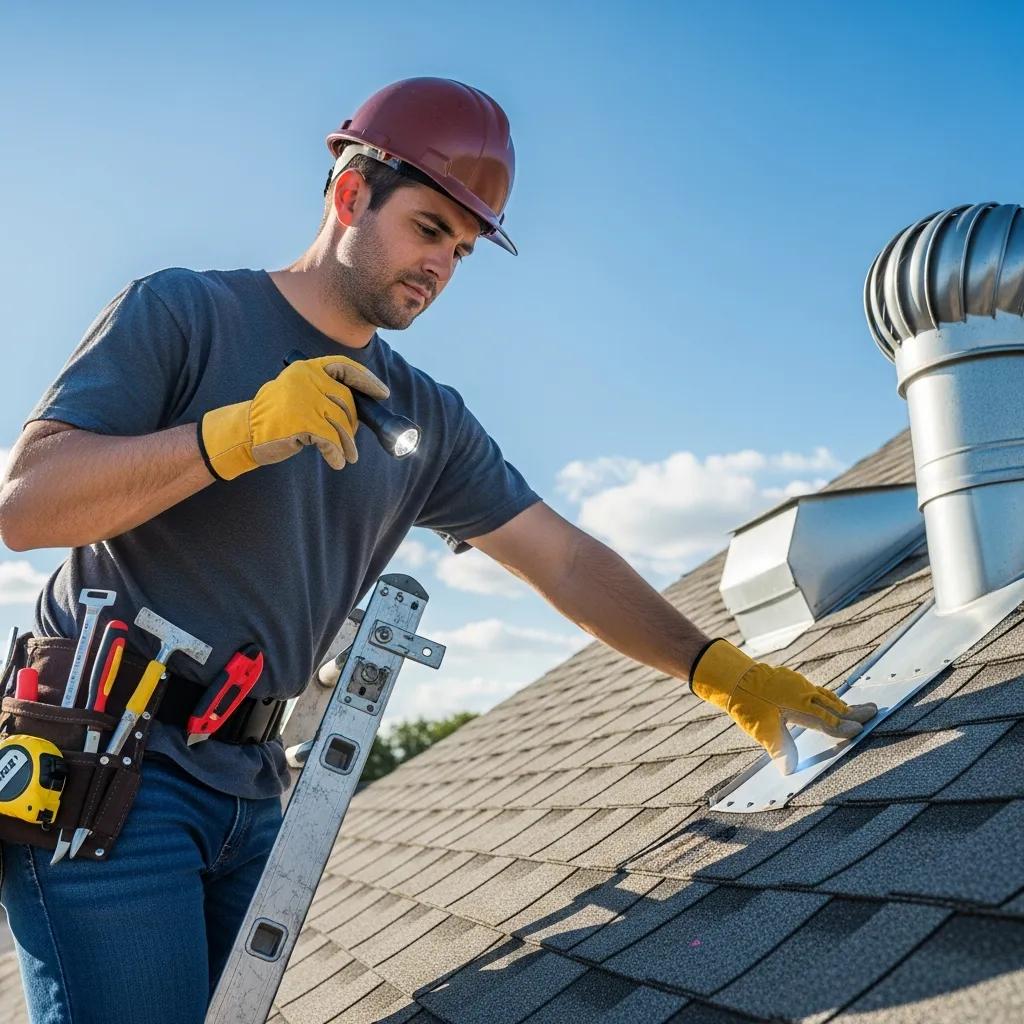
- Did they go in the attic? If not, they’re guessing about ventilation and deck integrity.
- Did they take photos? A good inspector takes 30-60 photos per job. Ask to see them.
- Did they talk you out of anything? Good contractors decline unnecessary work. Salespeople pile it on.
- Did they bring up insurance unprompted? Not in itself a red flag, but rushed insurance talk is.
- Were they polite to whoever was home? A crew manager rude to the person who opens the door will be rude to your contractor later.
| How to vet a Minneapolis roofing company: behavior on site | What it signals |
|---|---|
| Thorough attic + exterior inspection, photos shared | Detail-oriented; likely to catch problems pre-tear-off. |
| Walks you through every finding calmly | Project management skills; good communication ahead. |
| Offers a range of options, not just one product | Consultant mindset vs. salesperson mindset. |
| Ends with a timeline, not a contract | Respects your decision process. |
| Uses tablet-only estimate, no written follow-up | Scope will be flexible after signing — against your interests. |
When you’re comparing three estimates, this layer is usually what decides between them. Two contractors might have equally good paper trails, but one of them walked the property for 40 minutes and the other spent 12 minutes in your driveway. You already have your answer.
Layer 4: The reference call (the step almost no one takes)
Ask every contractor you’re seriously considering for three references from jobs completed in the last 12 months within 10 miles of your home. Then actually call them. This is where the top real estate agents pull far ahead of the average homeowner’s vetting.
Four questions that surface the truth:
- What did the contractor do well?
- What would you have them do differently?
- How did they handle change orders, if any came up?
- Would you hire them again?
Listen for pauses more than words. “Yeah, I’d probably hire them again” is not the same as “Absolutely. I already recommended them to my sister.” For Twin Cities homeowners, a reference in your zip code is gold — it probably means they’ve seen the same ventilation and ice-dam conditions your roof deals with. See more guidance in our master Minneapolis roofing companies pillar.
A contractor who can’t produce three recent local references isn’t hiding them — they don’t have them. Treat that as definitive information and move to the next bid.
— Paraphrased from a top Edina listing agent’s vendor vetting SOP
Layer 5: The contract read-through
Before you sign with the finalist, read their contract like you’re going to own it — because you will, for years, if anything goes wrong. The roofing contract checklist covers this in detail, but here are the four clauses that most often cause pain:
- Scope of work — everything that’s included, with brand and product line specified.
- Change order policy — written approval required before any scope change.
- Warranty — workmanship length (years), what’s covered, transferability to the next owner.
- Cancellation — MN 3-day right of rescission acknowledged, and a clear cancellation fee after that window.
If any of these are vague, ask for language. A contractor who won’t write it down is telling you what they intend to argue about later. For the bid-comparison stage right before this one, see how to compare roofing bids.
Frequently Asked Questions
How long should it take to vet a Minneapolis roofing company?
About 2 hours per finalist for a thorough job: 10 minutes of paperwork checks, 30 minutes reading reviews, a 45-minute on-site interview, 20 minutes of reference calls, and 15 minutes reading the contract. Across three finalists, that’s an afternoon — worth it for a $15,000-$25,000 decision.
What’s the one thing most homeowners skip when vetting?
The reference calls. Almost nobody actually picks up the phone and talks to past customers. Doing it moves you ahead of 90% of your neighbors — and past customers are surprisingly honest when you ask specific questions.
Can I trust online reviews when vetting a Minneapolis roofing company?
Aggregate star ratings, no. The worst 10 reviews and the company’s responses, yes. Patterns matter more than averages — if three different homeowners describe the same communication failure, that’s the failure mode you’d experience too.
Do manufacturer certifications really matter?
Yes, for two reasons: they require installation training (the failure rate on certified crews’ work is measurably lower), and they unlock stronger manufacturer warranties. See our full explainer on roofing certifications.
What’s a quick disqualifier during vetting?
No physical Minneapolis-metro office, no in-state MN license, or an offer to cover your deductible. Any one of those and the contractor is off the list. See our full list of roofing contractor red flags.
Looking for a Minneapolis roofing pro who documents every step?
We’re Minneapolis Roofing Company — a licensed, insured, local crew that shows up when we say we will, documents every step with photos, and backs our workmanship in writing. If you’re looking for a Minneapolis roofing pro who documents every step, we’d love to be the name you recommend to your neighbor.
Additional Minneapolis roofing vetting resources
- Minnesota Department of Labor and Industry — the state regulator you’ll check licenses through
- Better Business Bureau of Minnesota and North Dakota — neutral complaint tracking and accreditation records
- National Roofing Contractors Association homeowner guide — industry-neutral guidance on hiring a roofing contractor
