
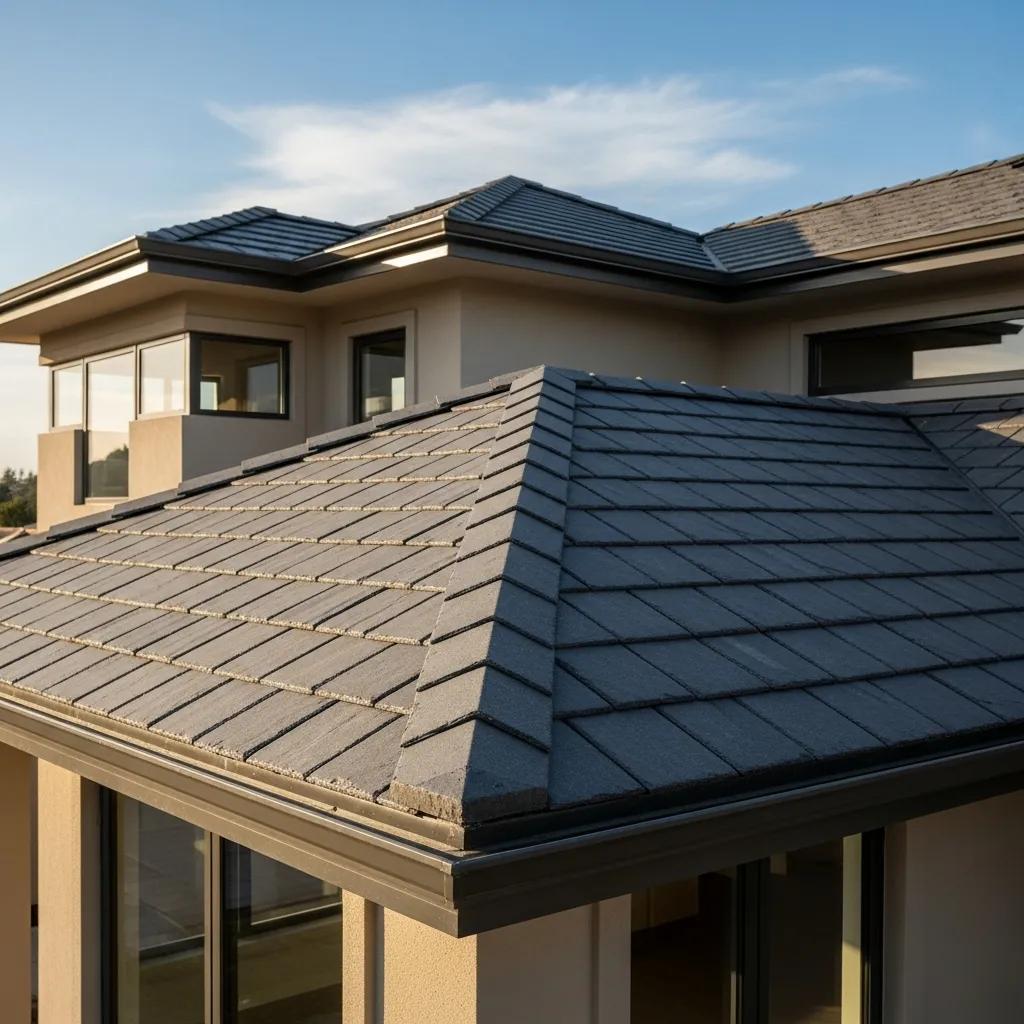
Synthetic Slate and Composite Roofing in Minneapolis: The Premium Upgrade Worth Knowing About
There’s a category of roofing most Minneapolis homeowners have never heard of that sits between asphalt and metal on price, and above both on aesthetic for specific home styles: synthetic slate and composite roofing. Brands like DaVinci, Brava, EcoStar, and CeDUR make polymer-based tiles that mimic natural slate or cedar shake, without the weight penalty of real slate or the maintenance burden of real wood. For the right Minneapolis home, they’re the genuine premium option.
This guide covers synthetic slate and composite roofing in Minneapolis: what the category actually is, which brands dominate the 2026 market, how it compares on cost and durability to asphalt and metal, and which Minneapolis home types are the natural fit.
Synthetic slate and composite roofing in Minneapolis: what this category actually is
Synthetic slate and composite roofing is a family of polymer-based roofing tiles engineered to look like natural slate or cedar shake while delivering meaningfully better performance than either. Most lines are made from a blend of recycled rubber, plastic, or engineered polymers with UV inhibitors and impact modifiers baked in. Key characteristics of the category:
- Weight. 200–400 lb per square. Heavier than asphalt (~240–480 lb) but far lighter than real slate (~800–1,500 lb). Most Minneapolis roof structures handle synthetic slate without reinforcement.
- Installed cost. $14–$22 per sq ft installed — roughly 2x asphalt, similar to standing seam metal.
- Expected lifespan. 40–50 years in Minneapolis climate; most manufacturers offer 50-year limited lifetime warranties.
- Hail and impact resistance. Most premium lines carry UL 2218 Class 4 rating and qualify for Minnesota insurance discounts.
- Aesthetic. The selling point. Period-accurate slate or shake look on homes where asphalt feels wrong and real slate is unaffordable or too heavy.
- Maintenance. Low. No granule loss (unlike asphalt), no fastener inspection (unlike exposed-fastener metal), no staining (unlike real cedar).
The category is small but growing in the Minneapolis metro. It’s most common on historic home restorations, high-end remodels in upscale neighborhoods, and architect-designed custom builds. For the full material landscape, see the Minneapolis roofing materials pillar.
The four synthetic slate and composite brands worth knowing in Minneapolis
Four brands dominate the 2026 Minneapolis market. Each has a distinct identity and a specific home-type fit:
| Brand | Profile | Cost / sq ft installed | MN lifespan | Strengths |
|---|---|---|---|---|
| DaVinci Roofscapes | Slate and shake polymer tiles | $16.00 – $22.00 | 45–50 years | Class 4 rated, 50-year warranty, broad color palette |
| Brava Composite Roof | Spanish tile, slate, shake profiles | $15.00 – $20.00 | 40–50 years | Class 4 on most lines, lightweight, color through body |
| EcoStar (Carlisle) | Recycled rubber / plastic slate | $14.00 – $18.00 | 40–50 years | Class 4 on premium lines, strong environmental credentials |
| CeDUR | Synthetic shake profiles | $15.00 – $19.00 | 40–50 years | Class A fire rating, authentic shake texture, Class 4 impact |
DaVinci is the Minneapolis market leader in the slate-look category; CeDUR leads the shake-look category. Brava is the technology leader with color-through-body tiles (chips don’t show base material). EcoStar is the environmental-credentials pick (highest recycled content).
All four require specialized installer training. Fewer than a dozen Minneapolis-area contractors have deep experience with any synthetic slate line; confirm manufacturer certification before signing. For contractor selection, see the Minneapolis roofing companies pillar.
Synthetic slate vs. asphalt vs. metal: how the comparison actually plays out in Minneapolis
Where does synthetic slate and composite roofing fit in the broader Minneapolis material landscape? Here’s the three-way comparison on the factors that matter most:
| Factor | Architectural asphalt | Synthetic slate / composite | Standing seam metal |
|---|---|---|---|
| Installed cost / sq ft | $7.00 – $11.00 | $14.00 – $22.00 | $15.00 – $24.00 |
| Expected MN lifespan | 25–30 years | 40–50 years | 40–70 years |
| Best aesthetic fit | Universal | Historic, Tudor, craftsman, high-end colonial | Lake home, modern, cabin |
| Weight | Moderate | Moderate | Light |
| Snow shedding | Moderate | Low-moderate | Excellent |
| Hail resistance (Class 4) | Available | Available | Available |
| Maintenance burden | Moderate | Minimal | Minimal |
| Installer availability in MN | Broad | Limited | Limited |
| Insurance discount availability | Class 4 yes | Class 4 yes | Class 4 yes |
The scenario where synthetic slate genuinely wins: a Minneapolis home with slate-appropriate architecture (Tudor, craftsman bungalow, historic colonial, prairie-style) where real slate is too expensive or too heavy, asphalt would look visually wrong, and metal doesn’t match the design vocabulary. It’s a narrow but real niche.
Synthetic slate exists because the homeowner who wants the look of slate on a 1920s craftsman rarely has $40 per square foot for real slate or the roof structure to carry it. A good DaVinci install on that house will deliver a slate aesthetic, a 50-year lifespan, Class 4 hail performance, and an all-in cost under $18 per square foot. That’s a genuinely new value proposition in the roofing market, and it’s why the category is growing even as it stays niche.
— Paraphrased from a 2024 National Roofing Contractors Association materials briefing
Is synthetic slate and composite roofing the right fit for your Minneapolis home?
Five-question screening test for whether synthetic slate is worth exploring:
- Architectural style. Is the home Tudor, craftsman, prairie-style, Cape Cod, historic colonial, or architect-designed custom? If yes, synthetic slate is potentially a strong fit. If the home is a 1980s ranch, 1990s two-story, or standard suburban build, asphalt is probably the better match.
- Hold horizon. Planning to own the home 15+ years? Synthetic slate’s lifespan pays off. Selling within 5? Architectural asphalt is usually the right call.
- Neighborhood baseline. If you’re in a historic district, lake neighborhood, or upscale enclave where premium materials are valued, synthetic slate holds its premium at resale. In a mid-market suburb, it may not.
- Budget. Can you comfortably afford $35,000–$55,000 for a 25-square roof? If budget is tight and there’s pressure to replace this season, architectural asphalt gets the roof on now.
- Contractor access. Is there a Minneapolis contractor with certified synthetic-slate experience willing to quote your project? If you can’t find one, the install-quality risk outweighs the material benefits.
For cost comparison detail, see the Minneapolis roof replacement cost pillar. For the broader material decision framework, the Minneapolis roofing materials pillar. For the metal-vs-asphalt decision specifically, metal roof vs. asphalt shingle in Minneapolis. For storm-claim dynamics, the Minneapolis storm damage claim pillar. Further reading: the DaVinci Roofscapes product library, the Brava Composite Roof product library, and the NRCA consumer center.
Frequently Asked Questions
What is synthetic slate roofing?
Synthetic slate is a polymer-based roofing tile engineered to mimic natural slate. Made from engineered polymers or recycled rubber / plastic blends with UV inhibitors and impact modifiers, it delivers a 40–50-year lifespan at a fraction of natural slate’s cost and weight. Top brands include DaVinci Roofscapes, Brava, EcoStar, and CeDUR.
How much does synthetic slate roofing cost in Minneapolis?
Typically $14–$22 per sq ft installed in 2026, depending on brand and profile. That puts it at roughly 2x architectural asphalt and similar to standing seam metal. A 25-square Minneapolis roof typically runs $35,000–$55,000 for a synthetic slate install.
How long does synthetic slate roofing last in Minneapolis?
Typically 40–50 years with manufacturer limited-lifetime warranties of 50 years from major brands like DaVinci and Brava. That’s roughly 20 additional years over architectural asphalt and similar to standing seam metal.
Is synthetic slate a good fit for Minnesota climate?
Yes. Quality synthetic slate lines handle Minnesota’s freeze-thaw cycles, thermal swings, and hail exposure well. Most premium lines carry UL 2218 Class 4 impact rating and qualify for Minnesota insurance discounts. The UV inhibitors and polymer matrix perform consistently across our temperature range.
Which homes in Minneapolis are the best fit for synthetic slate?
Tudor, craftsman, prairie-style, Cape Cod, historic colonial, and architect-designed custom homes where natural slate is unaffordable or too heavy, asphalt looks visually wrong, and metal doesn’t match the architecture. Historic neighborhoods and upscale enclaves are the prime markets.
Looking for a Minneapolis roofer certified in synthetic slate systems?
We’re Minneapolis Roofing Company — a licensed, insured, local crew that installs asphalt, metal, and synthetic systems across the Minneapolis metro. If you’re looking for a Minneapolis roofer certified in synthetic slate systems, we’d love to be the name you recommend to your neighbor after the install.
