
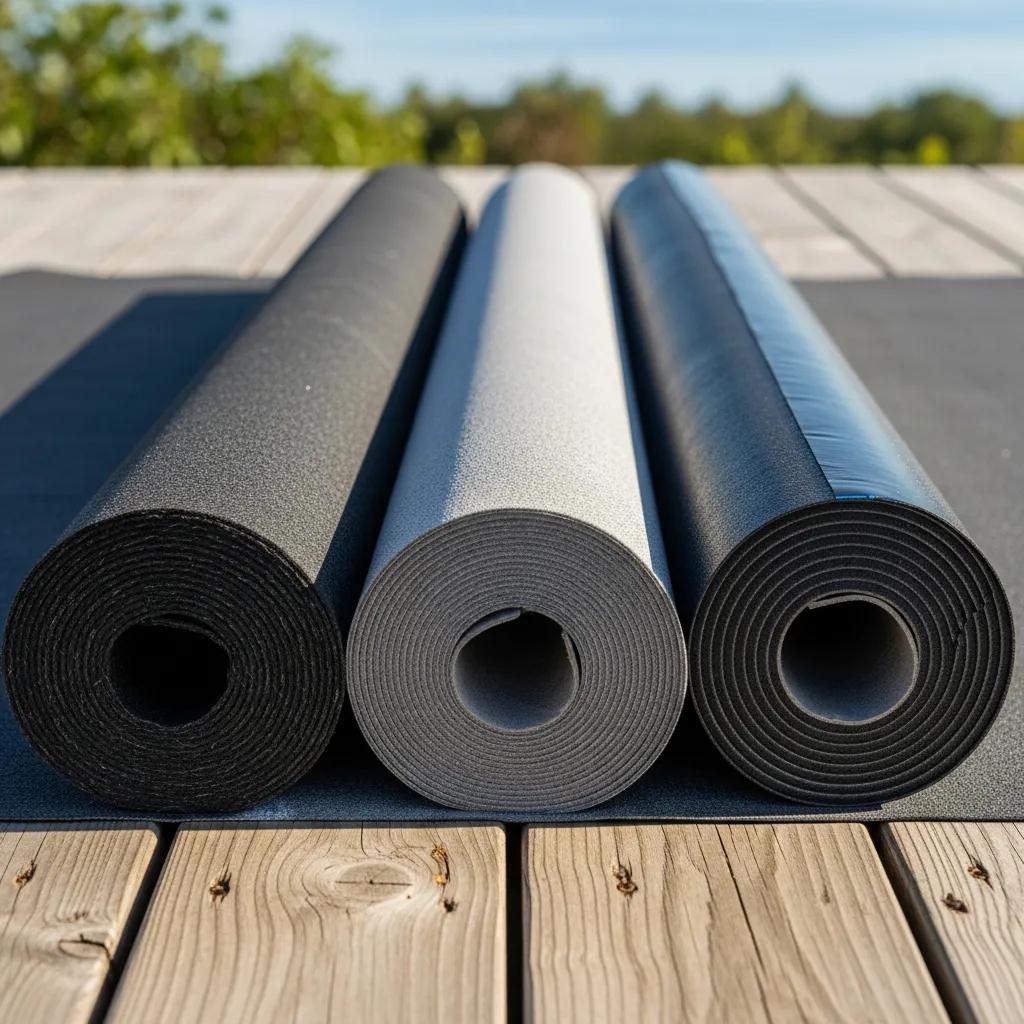
Roofing Underlayment Types in Minnesota: Felt, Synthetic, and Code Requirements for 2026
Underlayment is the layer between your wood decking and your shingles. Most homeowners never see it, never ask about it, and never know it exists — which is exactly how cheaper contractors prefer it. The wrong underlayment (or cheap, undocumented installation) can cost you 5–10 years of roof life, void your manufacturer warranty, and leave your attic exposed during the tear-off window when a storm hits.
This is the homeowner’s briefing on roofing underlayment types in Minnesota: 15-pound felt, synthetic underlayment, self-adhering membranes, what Minnesota code actually requires in 2026, and how to ensure your roof has proper underlayment specification in writing.
Roofing underlayment in Minnesota: what it does and why it matters
Roofing underlayment is the weatherproof sheet layer installed over the decking and under the shingles. It serves three critical functions:
- Secondary weather barrier. If shingles fail or wind-driven rain gets past the shingle layer, underlayment is the second line of defense preventing water from reaching the decking.
- Protection during construction. Between tear-off and new shingle installation, underlayment keeps the home dry. In Minneapolis spring and fall (our main re-roofing windows), pop-up storms are common, and underlayment coverage is what prevents interior water damage during the project.
- Decking protection against asphalt bleed-through. Hot asphalt from the bottom of shingles can bleed into raw decking, staining and accelerating wood degradation. Underlayment prevents this contact.
Three main underlayment types are used in Minneapolis in 2026. Each has a different cost, performance profile, and code compliance status. For the materials overview, see the Minneapolis roofing materials pillar.
Felt vs. synthetic underlayment in Minneapolis: the practical comparison
The two dominant categories are traditional asphalt-saturated felt and synthetic (polymer) underlayment. The industry shifted sharply toward synthetic in the 2010s, and synthetic is now the default on quality Minneapolis installs. But felt is still code-compliant and appears on budget installs:
| Factor | 15-lb asphalt felt | Synthetic underlayment |
|---|---|---|
| Installed cost / square | $0.15 – $0.30 | $0.25 – $0.50 |
| Weight per roll | 60–70 lb (heavy) | 15–20 lb (light) |
| Tear strength | Low — tears easily | High — polymer reinforced |
| UV resistance when exposed | 30 days typical max | 90–180 days typical max |
| Water absorption | Absorbs (becomes heavier and tears) | Repels — doesn’t absorb |
| Wrinkling and telegraphing through shingles | Can wrinkle and show under thin shingles | Stays flat |
| Fastener holding | Adequate | Excellent — polymer resists nail tear |
| Typical lifespan | 15–20 years | 30–40 years |
| Manufacturer warranty compatibility | Most shingle warranties OK | Most premium shingle warranties require synthetic |
The practical summary: for any new asphalt shingle install in Minneapolis in 2026, synthetic is the right call. The cost premium is small (~$75–$200 on a typical roof), the performance advantage is meaningful, and many premium shingle manufacturers (GAF, CertainTeed, Owens Corning) require synthetic for their enhanced warranty coverage. For brand detail, see best asphalt shingle brands in Minneapolis.
Self-adhering underlayment and ice-and-water shield in Minnesota
Beyond the basic felt-vs-synthetic question, Minnesota homes need an additional underlayment category in specific locations: self-adhering rubberized asphalt membrane, commonly called ice-and-water shield. Minnesota building code requires this in specific applications:
- Eaves ice barrier. Minnesota Building Code (following IRC R905.1.2) requires ice barrier at the eaves of asphalt shingle roofs, extending from the eave edge to a point at least 24” inside the exterior wall of the building. This is the ice-dam zone.
- Valleys. Ice-and-water shield is standard in all roof valleys, where water volume is highest and ice accumulation risk is greatest.
- Around penetrations. Chimneys, skylights, vent stacks, and other penetrations should have ice-and-water shield installed around their perimeter for redundant waterproofing.
- Low-slope sections. Any roof section between 2:12 and 4:12 pitch should have full ice-and-water shield coverage (not just at eaves) per most manufacturer specifications.
Self-adhering rubberized asphalt membrane is a peel-and-stick product that seals around nail penetrations — this self-sealing characteristic is what makes it effective against ice dam back-up. Popular Minneapolis-available brands: GAF WeatherWatch, CertainTeed WinterGuard, Owens Corning WeatherLock, Grace Ice & Water Shield. Cost: $0.80–$1.40 per sq ft installed. Coverage: 3 feet from the eave is minimum; 6 feet is common on homes with ice dam history.
For deeper detail on ice-and-water shield, see ice and water shield in Minneapolis. For Minnesota storm-damage claim dynamics, the Minneapolis storm damage claim pillar.
Underlayment is where quality roofing projects separate from cheap ones, because the homeowner can’t see it after the shingles go down. A cheap contractor might spec 15-lb felt on an install where a premium synthetic would be appropriate, pocket the $200 difference, and the homeowner never knows until a failure 15 years later. Always ask what specific underlayment product will be used, get the brand and SKU on the estimate in writing, and keep the packaging receipt from the install.
— Paraphrased from a 2024 National Roofing Contractors Association homeowner education briefing
How to verify your Minneapolis roofing underlayment specification
Six checklist items to verify underlayment on your Minneapolis roof install:
- Underlayment brand and product specified in writing. The estimate and contract should name the specific synthetic underlayment product (e.g., “GAF FeltBuster”, “Owens Corning ProArmor”, “CertainTeed RoofRunner”) and the ice-and-water shield product (e.g., “GAF WeatherWatch”). “Felt paper” or “underlayment” without product detail is a warning sign.
- Ice-and-water shield coverage documented. Contract should specify linear feet of ice-and-water shield at eaves (minimum 3 feet inside exterior wall per Minnesota code), in valleys, and around penetrations. 6-foot eaves coverage is best-practice for homes with ice dam history.
- Installation pattern specified. Underlayment should be installed with proper overlap (2” minimum on horizontal laps, 6” on vertical), fasteners at 12” on center, and any tears or gaps patched before shingle installation.
- Tear-off protection plan. On multi-day installs, the crew should cover exposed decking with underlayment at the end of each work day to protect against overnight weather.
- Warranty compatibility. If you’re buying into a manufacturer’s enhanced warranty (GAF Golden Pledge, CertainTeed 4-Star, Owens Corning Platinum), confirm the underlayment brand matches the required product list. Mismatched brands can void enhanced warranty coverage.
- Photo documentation. A quality contractor will photograph underlayment installation before shingles cover it. Ask for photos; if they don’t offer, ask the question again before signing.
For contractor selection process, see the Minneapolis roofing companies pillar. For total project cost understanding, the Minneapolis roof replacement cost pillar. For the decking beneath the underlayment, roof decking: OSB vs plywood in Minneapolis. For flashing detail at penetrations, roof flashing, drip edge, and ridge caps. Further reading: the ARMA asphalt roofing resource, the NRCA consumer center, and the International Code Council reference.
Frequently Asked Questions
What’s the difference between felt and synthetic roofing underlayment?
Felt is asphalt-saturated paper that’s been the traditional standard for 100+ years — heavy, tears easily, absorbs water, with 15–20 year lifespan. Synthetic is polymer-based — lighter, stronger, water-resistant, with 30–40 year lifespan. Synthetic has been the standard on quality installs since the 2010s.
Is synthetic underlayment required by Minnesota code?
No — Minnesota code allows either 15-lb felt or code-approved synthetic underlayment on asphalt shingle roofs. However, many premium shingle manufacturer warranties (GAF Golden Pledge, CertainTeed 4-Star, Owens Corning Platinum) require synthetic for enhanced coverage. Check your warranty tier for specifics.
How much ice-and-water shield does Minnesota require?
Minnesota Building Code (following IRC R905.1.2) requires ice barrier at eaves extending at least 24” inside the exterior wall line. In practice, quality Minneapolis installs extend 3–6 feet from the eave edge. Valleys and penetrations should also have ice-and-water shield coverage.
Which synthetic underlayment is best for Minneapolis?
GAF FeltBuster, CertainTeed RoofRunner, Owens Corning ProArmor, and IKO Stormtite are the major Minneapolis-available synthetic underlayments. All perform well. The best choice is whichever matches your shingle brand for warranty compatibility — GAF with GAF, CertainTeed with CertainTeed, etc.
How much does roofing underlayment cost in Minneapolis?
Basic 15-lb felt: $0.15–$0.30 per sq ft installed. Synthetic underlayment: $0.25–$0.50 per sq ft. Self-adhering ice-and-water shield: $0.80–$1.40 per sq ft. On a typical Minneapolis re-roof, premium synthetic across the full roof adds roughly $75–$200 over 15-lb felt, and ice-and-water shield adds $400–$1,200 depending on coverage.
Looking for a Minneapolis roofer who specifies premium synthetic underlayment?
We’re Minneapolis Roofing Company — a licensed, insured, local crew that installs asphalt, metal, and synthetic systems across the Minneapolis metro. If you’re looking for a Minneapolis roofer who specifies premium synthetic underlayment, we’d love to be the name you recommend to your neighbor after the install.
