
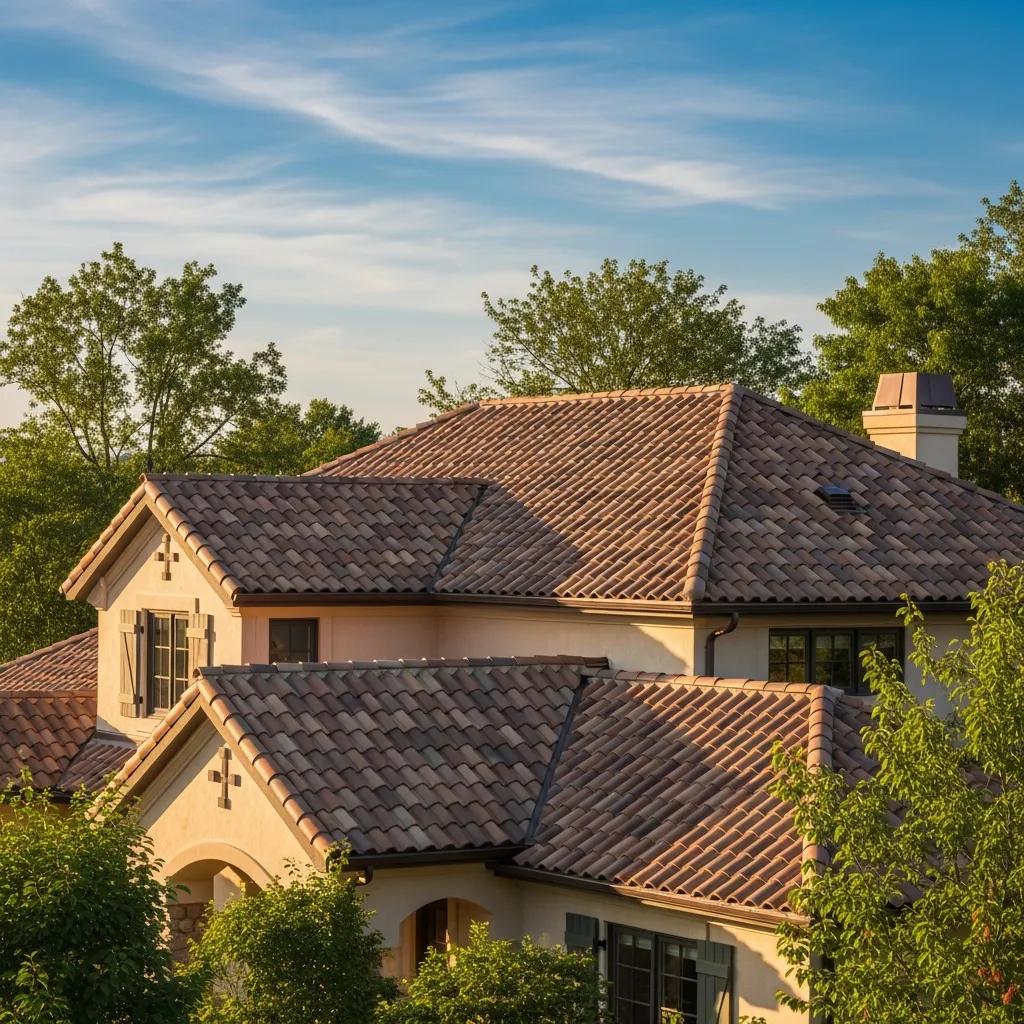
Tile Roofing in Minneapolis: Why It’s Rare, When It Works, and What to Expect
Tile roofing is a staple in Phoenix, Miami, and Los Angeles. In Minneapolis it’s rare enough that most homeowners have never seen one up close. The reasons are specific: Minnesota’s freeze-thaw cycles punish porous clay tiles, most residential roof structures can’t carry the weight without reinforcement, and the aesthetic fit is limited to a narrow band of Mediterranean-style homes. But tile isn’t impossible here, and on the right home it’s a genuine option.
This guide explains tile roofing in Minneapolis: why it’s uncommon, when it genuinely works, how clay and concrete tiles differ, what to expect for cost and weight, and the rare scenarios where it’s worth pursuing in 2026.
Why tile roofing in Minneapolis is rare
Three specific reasons tile is uncommon in Minnesota, and all three need to be addressed on any potential Minneapolis tile install:
- Freeze-thaw vulnerability on porous clay. Traditional clay tiles absorb small amounts of moisture. In climates without sustained freezing, that’s fine. In Minnesota, that moisture freezes and expands, causing surface spalling, cracking, and premature tile failure. Only grade-1 frost-resistant clay tiles (or concrete tiles) are appropriate here.
- Weight. Clay tile: 800–1,200 lb per square. Concrete tile: 900–1,400 lb per square. Compare to architectural asphalt at ~240–480 lb. Most Minneapolis residential roof structures are engineered for asphalt or light metal, not tile. Structural reinforcement is often required, adding $5,000–$15,000 to the project.
- Aesthetic fit. Tile roofs look natural on Mediterranean, Spanish Colonial, and Southwestern-style homes. In the Minneapolis housing stock, that’s a very narrow slice — maybe 2–3% of homes. On a typical 1990s two-story or 1970s ranch, tile looks visually wrong and hurts resale.
Add the specialized installer requirement and limited material availability locally, and you get a category that’s essentially niche. Most Minneapolis roofing contractors have never installed a tile roof. For the broader Minneapolis material landscape, see the Minneapolis roofing materials pillar.
Clay tile vs. concrete tile: the meaningful differences in Minnesota
If a Minneapolis tile install makes sense, the first choice is clay versus concrete. The two products look similar from the street but perform quite differently:
| Factor | Clay tile | Concrete tile |
|---|---|---|
| Weight per square | 800 – 1,200 lb | 900 – 1,400 lb |
| Installed cost / sq ft (2026 MN) | $16.00 – $28.00 | $11.00 – $18.00 |
| Expected MN lifespan | 40–75 years (frost-grade only) | 30–50 years |
| Freeze-thaw resistance | Only frost-grade tiles; non-frost fails | Good across all grades |
| Color stability over time | Excellent — color runs through body | Moderate — surface coating fades |
| Weight penalty | Lower | Higher |
| Availability in MN | Specialty order; 4–8 week lead time | Better — some local distribution |
| Installer experience in MN | Very limited | Slightly more common |
The one-line summary: clay is the premium option when properly frost-rated, with longer life and better color stability; concrete is the cost-effective option with more local availability. For frost performance, only grade-1 frost-resistant clay tiles or high-grade concrete tiles should be considered in Minnesota. Non-frost-rated clay will fail here, sometimes within 5–10 years.
When tile roofing actually makes sense in Minneapolis
Narrow but real scenarios where tile is the right call:
- Mediterranean or Spanish Colonial architecture. If the home was built as a Mediterranean-style or Spanish Colonial, tile is often the original architectural intent. Replacing with tile (rather than asphalt or metal) preserves design integrity and resale value.
- High-end custom build with tile-appropriate design. Architect-designed custom homes where tile is part of the design vocabulary from day one. The roof structure is engineered to carry the weight, and tile is written into the specifications.
- Historic restoration. A small number of early-20th-century Minneapolis homes were built with clay tile roofs. Restoring to original material preserves historic character and may qualify for preservation credits in certain districts.
- Extreme long-hold willingness to pay premium. A homeowner who wants a roof that will outlive them and is willing to pay the premium. On a well-installed frost-grade clay tile roof, 75+ year lifespan is achievable.
Outside these scenarios, tile rarely makes sense in Minneapolis. Asphalt, metal, or synthetic slate will deliver better performance-per-dollar on most homes. For the synthetic-slate alternative that captures the aesthetic without the weight penalty, see synthetic slate and composite roofing in Minneapolis.
The question homeowners should ask before a Minneapolis tile install isn’t ‘can my roof carry it’ but ‘does the architecture call for it.’ Tile on the wrong house looks like a costume. Tile on the right house looks like it was always meant to be there. The structural engineering and frost-grade tile sourcing can be solved. Aesthetic mismatch can’t.
— Paraphrased from a 2024 Tile Roofing Industry Alliance technical consultation on cold-climate installations
What to expect if you pursue a tile roof in Minneapolis
If you’re in one of the narrow scenarios where tile makes sense, here’s a realistic expectation-setting for the project in 2026:
- Structural engineering review. A structural engineer inspects your roof framing and determines whether it can carry tile weight. Typical cost: $500–$1,500. Results drive the next decisions.
- Reinforcement if needed. If framing needs reinforcement (it usually does on homes not originally built for tile), expect $5,000–$15,000 in structural work before any roofing begins. Sister rafters, additional collar ties, and sometimes truss modifications are common.
- Specialty contractor sourcing. Minneapolis has fewer than a dozen contractors with meaningful tile roofing experience. Expect to interview 2–4 firms, with longer scheduling windows and higher travel or specialty fees.
- Frost-grade tile sourcing. Only grade-1 frost-resistant clay or high-grade concrete tiles should be used. Sourcing may require 4–8 week lead times from manufacturer warehouses. Budget for freight.
- Total installed cost. Budget $22,000–$50,000+ for a typical Minneapolis home tile install, including any structural reinforcement. Clay tile sits at the upper end; concrete tile at the lower end.
- Expected lifespan. 40–75 years on clay, 30–50 on concrete. Tile itself can outlast the underlayment and flashing beneath, so budget underlayment replacement every 30–40 years even when the tile is fine.
For storm claim dynamics that affect tile-roof insurance, see the Minneapolis storm damage claim pillar. For the contractor selection process, the Minneapolis roofing companies pillar. For the cost landscape overall, the Minneapolis roof replacement cost pillar. For the underlayment systems that sit beneath tile, roofing underlayment types and Minnesota code. Further reading: the Tile Roofing Industry Alliance technical resource, the NRCA consumer center, and the International Code Council for structural reference.
Frequently Asked Questions
Can you put a tile roof on a Minneapolis home?
Yes, but it’s rare and requires special conditions. Structural reinforcement is often needed for the weight (tile is 3–5x heavier than asphalt), frost-grade tiles must be specified, and the home’s architecture should suit the material. Best fits are Mediterranean-style, Spanish Colonial, or architect-designed custom homes.
Why is tile roofing so rare in Minneapolis?
Three reasons: Minnesota freeze-thaw cycles damage non-frost-rated clay tiles, most residential roof structures need reinforcement for tile weight, and the aesthetic only suits a narrow band of home styles (maybe 2–3% of Minneapolis housing stock). Most Minneapolis contractors have never installed a tile roof.
How much does a tile roof cost in Minneapolis?
Budget $22,000–$50,000+ for a typical Minneapolis home tile install in 2026, including any structural reinforcement. Installed per-square-foot cost: clay tile $16–$28, concrete tile $11–$18. Structural reinforcement adds $5,000–$15,000 if required.
What’s the difference between clay and concrete roof tile in Minnesota?
Clay tile has color that runs through the body, better color stability, longer life (40–75 years on frost-grade), and higher cost. Concrete tile is heavier, has surface coatings that fade over time, shorter life (30–50 years), and lower cost. Both require frost-appropriate grading for Minnesota.
How long does a tile roof last in Minneapolis?
40–75 years on well-installed frost-grade clay tile. 30–50 years on quality concrete tile. The tile itself often outlasts the underlayment, so budget underlayment replacement every 30–40 years even when the tile is fine. Non-frost-rated clay can fail in Minnesota within 5–10 years.
Looking for a Minneapolis roofer experienced in tile roofing installations?
We’re Minneapolis Roofing Company — a licensed, insured, local crew that installs asphalt, metal, and synthetic systems across the Minneapolis metro. If you’re looking for a Minneapolis roofer experienced in tile roofing installations, we’d love to be the name you recommend to your neighbor after the install.
