
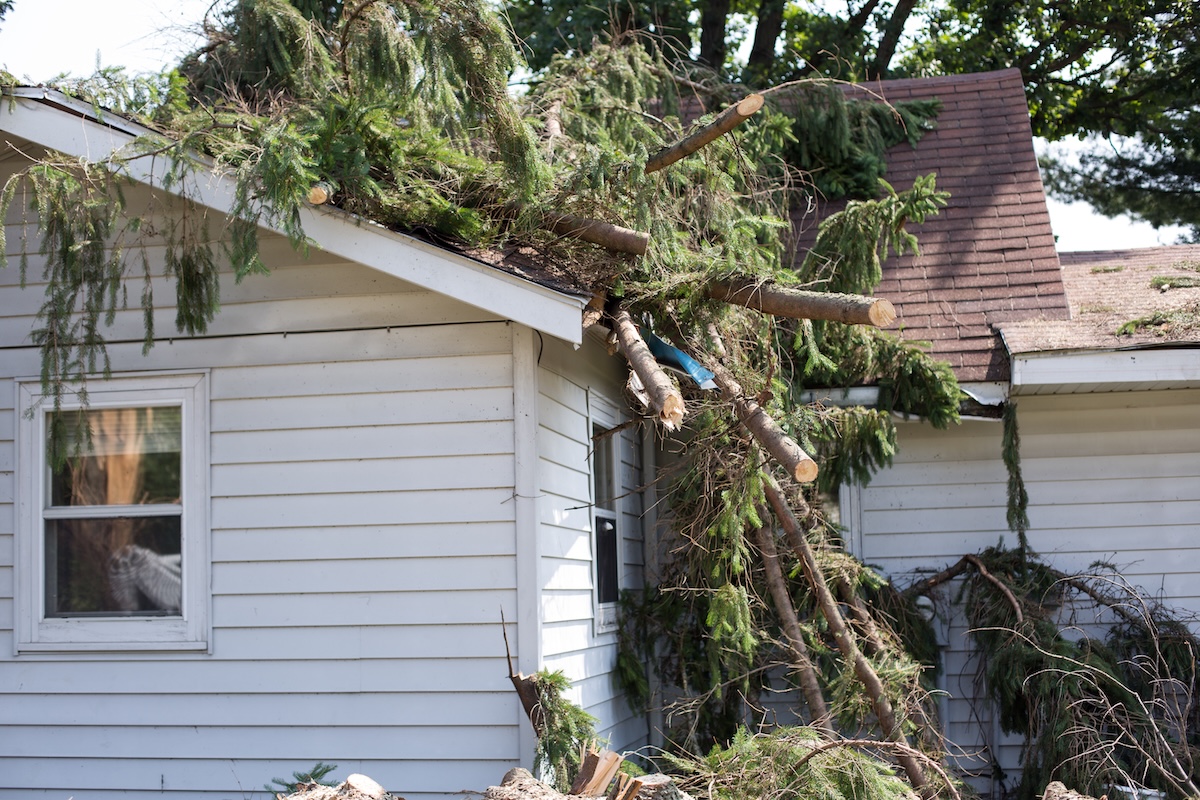
Wind Damage Roof Repair in Minneapolis: What Counts, What’s Covered, and What’s the Real Cost
The Minneapolis metro sees wind events capable of damaging roofs several times per year. Straight-line winds in the 50–70 mph range happen routinely. Derecho-level events (sustained 75–100+ mph, such as the May 2022 event) happen less often but cause widespread damage when they do. And tornadoes, while rare enough that most homeowners never experience one, can wipe out an entire neighborhood’s roofs when they touch down.
This is the practical guide to wind damage roof repair in Minneapolis: which wind speeds actually damage roofs, what wind damage looks like on an asphalt shingle roof, how to document a claim properly, what insurance covers vs. excludes as wear and tear, and what repairs cost in 2026.
What wind speeds actually damage Minneapolis roofs
Not every windy day damages roofs. The thresholds that matter:
- 30–45 mph gusts: Typical Minneapolis spring or summer storm. Healthy, in-warranty roofs handle these routinely. Damage rare except on poorly installed or already-compromised roofs.
- 45–60 mph gusts: Strong storm territory. Isolated shingle loss possible on older roofs (15+ years), on poorly fastened roofs, or on exposed edges (rakes, ridges). Most Minneapolis homeowners see this several times per year.
- 60–75 mph gusts: Severe thunderstorm threshold. Widespread shingle loss possible. Granule loss from debris impact. Some structural damage risk on older roofs.
- 75–90 mph gusts (severe storm / weak derecho): Substantial damage across wide areas. Roofs 10+ years old routinely lose significant shingle coverage. Debris damage becomes common. Trees fall.
- 90+ mph gusts (strong derecho / tornado peripheral): Catastrophic damage. Even new, well-installed roofs can lose shingles. Structural damage common. This is the May 2022 event level of damage.
- 120+ mph (tornado core): Total roof loss probable on most residential structures. Separate insurance tier of claim.
The Minneapolis reality: most “wind damage” claims come from 50–70 mph events, not dramatic derechos. The damage is often moderate (5–30 missing shingles, some lifted seams, granule loss in visible areas) but still triggers an insurance claim because repair costs exceed the deductible. For the broader repair landscape, the roof repair in Minneapolis pillar.
What wind damage looks like on a Minneapolis asphalt shingle roof
Wind damage presents in predictable patterns that differ from hail damage:
- Missing shingles in concentrated groups. Usually 5–30 shingles clustered on one slope, often on the windward side or at rake/ridge edges where wind lift forces are highest. Rarely random scatter across all slopes (that’s often a sign of installation failure, not a single wind event).
- Lifted seal strips on shingles that didn’t come off. When wind breaks the shingle’s seal bond but doesn’t pull the shingle off, the shingle is now lose and will fail in the next wind event. These are called “creased” or “broken-seal” shingles and are a key claim-documentation item — visible on close inspection as shingles that flap or lift when pushed from below.
- Torn or folded shingles that didn’t come off. Partial damage where the shingle tore along the nail line but stayed attached. Same failure mode as missing shingles, just caught partway.
- Granule loss from wind-driven debris. Branches, dirt, and small debris hitting shingles at wind speed can remove granules. Different signature from hail damage (which leaves round bruises).
- Damaged ridge caps and hip shingles. The ridge and hip of the roof are the highest-wind-stress zones. Ridge cap damage often precedes broader shingle loss on the field. See missing shingle repair in Minneapolis.
- Flashing lifted or torn. High wind can peel up metal flashing, especially drip edge at gable ends and exposed edges of step flashing. See roof flashing repair in Minneapolis.
The damage pattern matters for insurance claims. A carrier adjuster expects to see the signature of the claimed storm. A scattered pattern of aged shingles without ridge or edge damage looks like a normal wear-and-tear claim, not a wind event. For insurance claim mechanics, see the Minneapolis storm damage claim pillar.
Minneapolis wind damage repair cost: 2026 pricing
| Damage scope | 2026 typical cost (Minneapolis) | Insurance-typical outcome |
|---|---|---|
| 5–15 shingles missing, good match, localized | $500–$1,500 | Below deductible on most policies |
| 15–30 shingles missing, match may fail | $1,200–$3,200 | Claim-worthy, partial slope replacement |
| One slope with widespread damage, match fails | $4,500–$12,000 | Claim, full slope or roof under MN 65A.28 |
| Multiple slopes or full roof widespread damage | $18,000–$40,000+ | Claim, full roof replacement |
| Ridge cap replacement only | $800–$2,500 | Below deductible usually |
| Flashing replacement (drip edge, step, counter) | $500–$3,500 | Depends on extent |
| Tree strike with structural damage | $8,000–$60,000+ | Full claim including structure |
Two cost factors catch Minneapolis homeowners off guard. First: shingle matching. After a covered wind loss on a 10+ year-old roof, matching is often impossible, which triggers Minnesota Statute 65A.28 and can expand a partial repair into a full slope or full roof replacement at the insurer’s expense. Second: deductibles. Most Minnesota policies have separate (higher) wind/hail deductibles — commonly 1–2% of the dwelling coverage, which on a $400,000 home is $4,000–$8,000. Small wind damage often sits below that deductible. For cost context, roof repair cost in Minneapolis. For replacement economics, the Minneapolis roof replacement cost pillar.
After any named storm or significant wind event in the Minneapolis metro, three photos save homeowners thousands: a wide shot of the roof from the ground showing damage patterns, close-ups of any visible missing or lifted shingles, and a photo of any debris on the ground. These three photos establish the damage coincident with the storm date and defuse any later argument from the carrier that the damage is old.
— Paraphrased from Minnesota Department of Commerce consumer claim guidance
Filing a Minneapolis wind damage claim: the 6-step playbook
If you believe you have insurance-qualifying wind damage, the sequence that maximizes outcome:
- Document the damage immediately. Photos from the ground showing roof damage, close-ups of visible issues, and photos of any fallen debris or branches. Note the date, time, and approximate wind speed of the storm (NWS observations or weather apps are fine for this).
- Mitigate further damage. Tarp any active leaks. File receipts for emergency materials. Most policies require mitigation and cover its cost. See emergency roof repair in Minneapolis.
- Get a contractor’s written inspection report BEFORE calling the carrier. A licensed Minneapolis contractor’s pre-claim inspection gives you an independent damage assessment. Have them photograph everything and write a scope-of-damage report. This typically costs $0 for legitimate contractors (it’s an estimate, not a paid inspection).
- File the claim with specifics. Date, time, wind speed, damage description. Submit the contractor’s photos and report if the carrier asks. Don’t guess at numbers — let the adjuster and contractor negotiate scope.
- Have your contractor present at the adjuster’s inspection. This is legal in Minnesota and strongly recommended. The adjuster and contractor walk the roof together, which reduces scope disputes later.
- Review the claim payment against contractor scope. If the carrier’s offer excludes items your contractor documented, your contractor can submit a supplement. This is standard and usually resolves quickly with proper documentation.
Avoid: signing anything from a door-knocking contractor in the week after a storm, signing over claim proceeds to the contractor before the claim is resolved, accepting a deductible waiver (illegal in Minnesota under Statute 325E.66), or accepting the adjuster’s initial offer without a contractor review. See emergency roof repair in Minneapolis for storm-chaser red flags. For contractor vetting, the Minneapolis roofing companies pillar. For the full insurance process, the Minneapolis storm damage claim pillar. For materials selection during replacement, the Minneapolis roofing materials pillar. Further reading: IBHS FORTIFIED standards, NRCA consumer center, and the Minnesota AG consumer protection resource.
Frequently Asked Questions
At what wind speed does a Minneapolis roof start getting damaged?
Healthy in-warranty roofs typically handle 45 mph gusts without damage. Wind damage becomes common at 50–60 mph on older roofs (15+ years). At 60–75 mph, widespread damage across older roofs is likely. At 90+ mph, even new well-installed roofs can suffer significant damage. Minneapolis routinely sees 50–60 mph events; severe storms (75+ mph) happen a few times per year.
Does homeowner’s insurance cover wind damage to roofs in Minneapolis?
Yes, in most Minnesota policies, subject to a wind/hail deductible that is typically higher than the base deductible — often 1–2% of dwelling coverage. Wear and tear or neglect is excluded. Sudden storm-caused damage to a roof in generally good condition is typically covered, including partial-slope or full-roof replacement when shingle matching fails under MN Statute 65A.28.
What’s the difference between wind damage and hail damage on my roof?
Wind damage shows as missing shingles (often in clusters on windward slopes or ridge lines), lifted seal strips, torn shingles, and debris impact marks. Hail damage shows as round bruises on shingles, granule loss in circular patterns, and dents on metal flashing or gutters. An experienced contractor or adjuster can usually distinguish from the damage signature.
How much does wind damage roof repair cost in Minneapolis?
Typical 2026 pricing: 5–15 missing shingles $500–$1,500 (often below deductible); 15–30 shingles $1,200–$3,200; single slope widespread damage $4,500–$12,000; full roof $18,000–$40,000+; ridge cap only $800–$2,500. Tree-strike structural damage adds $5,000–$50,000+ depending on extent.
How long do I have to file a wind damage roof claim in Minneapolis?
Minnesota law requires claims to be filed within 2 years of the loss date for most property damage, though policy-specific timelines may be shorter. File as soon as damage is confirmed. Delaying more than a few weeks risks the carrier arguing the damage is pre-existing. Document with dated photos immediately after the storm event.
Looking for a Minneapolis contractor for wind damage roof repair and claim documentation?
We’re Minneapolis Roofing Company — a licensed, insured, local crew that handles everything from small leak repairs to full tear-offs across the Minneapolis metro. If you’re looking for a Minneapolis contractor for wind damage roof repair and claim documentation, we’d love to be the name you recommend to your neighbor after the work is done.
