
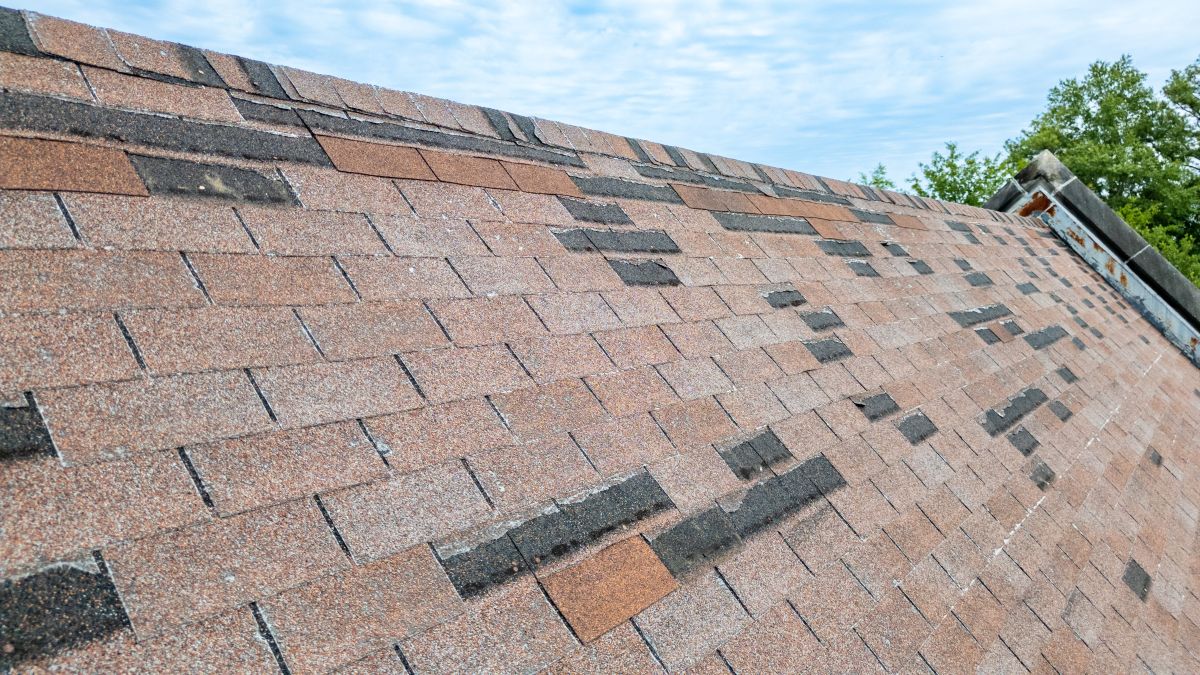
Missing Shingle Repair in Minneapolis: The Cost, Process, and Shingle-Match Reality
Missing shingles are the most common reason Minneapolis homeowners call us for repair. Wind peels them off. Hail dislodges the mat. A raccoon working the ridge loosens a row. Ice and snow loads can shear shingles at the valleys. It’s almost never a single, dramatic event — it’s the cumulative reality of Minnesota weather on a roof that has 20 to 25 years of life the manufacturer expects to get under ideal conditions.
This is the practical guide to missing shingle repair in Minneapolis: what it actually costs in 2026, what the repair process looks like, why shingle matching gets hard fast (and how Minnesota’s matching statute changes the game), and when a missing-shingle issue triggers a full slope or full roof replacement instead of a spot repair.
What causes missing shingles on Minneapolis roofs
Four recurring causes show up on Minneapolis roofs:
- Wind uplift. Sustained 50+ mph gusts or repeated 35–45 mph events over years can fatigue the seal strip and peel shingles off, especially at rake edges and ridge lines. The Minneapolis metro sees 50+ mph gusts several times per year. See wind damage roof repair in Minneapolis.
- Hail bruising that later fails. A hail hit may not remove the shingle immediately, but it can crack the mat beneath the surface granules. A year later, a wind event peels off the damaged shingle that a neighboring undamaged shingle would have held. See hail damage roof repair in Minneapolis.
- Poor initial installation. Nails driven too high (above the seal strip), under-nailed shingles (4 nails per shingle where 6 were called for), or shingles installed in cold weather without proper seal activation can all fail prematurely.
- Age and granule loss. Old asphalt shingles lose the granules that protect the asphalt mat from UV. Once bare asphalt is exposed, the mat dries, cracks, and shingles become brittle. At that point, missing shingles start showing up routinely — and spot repair stops being the right answer.
For the repair-vs-replacement decision framework, see roof repair vs replacement in Minneapolis. For the overall repair landscape, see the roof repair in Minneapolis pillar.
Missing shingle repair cost in Minneapolis: 2026 pricing
Shingle replacement pricing depends on the number of shingles, access difficulty, shingle match availability, and whether the underlying deck and underlayment need attention:
| Scope | 2026 typical cost (Minneapolis) | Notes |
|---|---|---|
| 1–5 shingles, easy access, good match | $300–$650 | Service-call minimum applies |
| 6–15 shingles, moderate access | $500–$1,200 | Includes labor, materials, haul-away |
| 15–30 shingles across slope, match available | $900–$2,200 | Check for underlying deck damage |
| 30+ shingles or poor match — partial slope replacement | $1,800–$5,500 | Match problems escalate fast |
| Full slope replacement (match failure + widespread loss) | $5,000–$16,000 | See below re: MN matching |
| Full roof replacement (severe widespread damage) | $18,000–$35,000+ | See roof replacement cost pillar |
The cost that catches Minneapolis homeowners by surprise is the service-call minimum. Most licensed roofers charge a minimum of $300–$500 to show up and do any work at all — this covers travel, setup, safety equipment, and a minimum labor window. Replacing a single shingle doesn’t cost $300 in materials. It costs $300 in logistics. For broader repair cost context, see roof repair cost in Minneapolis. For full-replacement economics, see the Minneapolis roof replacement cost pillar.
The Minneapolis shingle-matching problem — and MN Statute 65A.28
Here’s the part that changes everything about missing shingle repair in Minneapolis: asphalt shingles change color over time, and manufacturer color runs change every 1–3 years. A shingle installed in 2010 no longer exists from the manufacturer. Even if the product line is still made, the 2026 color run doesn’t match the 2010 installation.
The practical outcome: a spot repair on a 15-year-old roof almost always results in a patch that’s visible from the ground. Contractors mitigate this in four ways:
- Pulling replacement shingles from an inconspicuous area. Shingles from the back or garage slope are moved to the front-of-house repair area; the new shingles go in the inconspicuous location. This preserves curb appeal but roughly doubles the labor.
- Blending across a wider area. Rather than replace the 10 missing shingles with 10 new ones in one spot, the contractor weaves 30 shingles across a bigger area to soften the color transition.
- Accepting the mismatch if it’s not street-visible. A back-slope repair that no one can see from the ground may not be worth the premium labor for invisibility.
- Escalating to a full slope replacement under MN Statute 65A.28. Minnesota’s matching statute requires insurance carriers to restore buildings to a “reasonably uniform appearance” after a covered loss. If a color match isn’t available and the damage is on a street-visible slope, the statute often triggers full slope (or full roof) replacement instead of a patch repair. See Minneapolis storm damage claim pillar for the claim mechanics.
The matching-statute math is the single biggest reason a “repair 10 shingles” conversation becomes a “replace the whole slope” or “replace the whole roof” outcome — especially when a covered peril (wind, hail) caused the damage. For the materials side of what gets installed in a shingle replacement, see the Minneapolis roofing materials pillar.
If your roof is more than 10 years old and you’ve lost shingles on a street-visible slope due to a storm event, don’t accept a spot repair quote as your only option. The matching statute exists for a reason. A legitimate insurance-qualified contractor will work with your carrier to evaluate whether matching is achievable, and if not, whether the statute entitles you to a broader scope.
— Paraphrased from Minnesota Statute 65A.28 guidance
What a proper Minneapolis missing-shingle repair looks like on the roof
A quality missing-shingle repair follows the same process every time. If your contractor is skipping steps, they’re not doing the job right:
- Full slope inspection, not just the visible damage. Missing shingles are rarely isolated. Neighboring shingles are often compromised — seal failure, hail bruising, cracked mats — even if they haven’t come off yet. The repair should cover the actually-damaged area, not just the obvious holes.
- Underlying decking check. If shingles have been missing for more than a rain event or two, the underlayment and decking may be saturated or delaminating. Replacing shingles over bad decking is a warranty-voiding mistake. See roof decking OSB vs plywood in Minneapolis.
- Proper courses and alignment. The new shingles must tie into the existing courses without breaking the vertical offset pattern. A rushed repair that misaligns courses creates a seam water can track along.
- Six nails per shingle in Minnesota. The high-wind nailing pattern is the right default for Minneapolis exposure. Four-nail patterns are technically code-minimum on some products but underperform in Minnesota’s wind regime.
- Proper sealing. In cold weather, the factory seal strip may not activate for weeks. The contractor should apply a dab of roofing cement under each replacement shingle to ensure the bond happens before the next wind event.
- Documented scope and photos. Before and after photos of the repair area, a written statement of what was replaced, and a workmanship warranty — typical is 2–5 years on repair work specifically.
The whole process for a moderate repair (10–20 shingles on easy-access slope, good match or acceptable mismatch) typically takes 2–4 hours of on-roof work. Anything quoted as “15 minutes and we’re out” is skipping steps. For related repair types, see roof leak repair in Minneapolis, roof flashing repair in Minneapolis, and roof valley repair in Minneapolis. For contractor vetting, the Minneapolis roofing companies pillar. Further reading: NRCA consumer center, IBHS FORTIFIED, and Minnesota Statute 65A.28 (matching).
Frequently Asked Questions
How much does missing shingle repair cost in Minneapolis?
Typical 2026 Minneapolis missing shingle repair costs range from $300–$650 for 1–5 shingles on easy-access slopes, $500–$1,200 for 6–15 shingles, and $900–$2,200 for 15–30 shingles. If the match fails or damage is widespread, costs escalate to full slope replacement ($5,000–$16,000) or full roof replacement. Service-call minimums of $300–$500 apply even to the smallest repairs.
Why can’t my contractor match the shingles on my existing Minneapolis roof?
Asphalt shingle color runs change every 1–3 years at the manufacturer level, and shingles on your roof fade with UV exposure. After 10+ years, an exact match is typically impossible — even from the same manufacturer line. Contractors mitigate this by blending, pulling shingles from inconspicuous areas, or in insurance-covered damage, invoking Minnesota Statute 65A.28 for broader scope.
What is Minnesota’s matching statute and how does it affect shingle repair?
Minnesota Statute 65A.28 requires insurance carriers to restore covered property to “reasonably uniform appearance” after a covered loss. When a color match isn’t available and damage is on a street-visible slope, the statute often triggers full slope or full roof replacement instead of a patch repair. This applies to damage from covered perils like wind and hail.
Can I replace missing shingles myself on my Minneapolis home?
Technically yes for a homeowner comfortable on a ladder in safe weather, but we don’t recommend it for more than 1–2 shingles. Proper repair requires knowing the sealing pattern, nail placement, course alignment, and shingle lift-out technique without damaging surrounding shingles. DIY mistakes often create new leak paths. See the DIY roof repair safety guide for the specific risks.
How long does missing shingle repair take in Minneapolis?
A standard moderate repair (10–20 shingles, easy access, good or acceptable match) is typically 2–4 hours of on-roof work. Larger repairs or difficult access may take a full day. Scheduling usually runs 1–2 weeks out for non-emergency work, though emergency-tarped homes move faster. Shingle ordering may add time if the match is obscure.
Looking for a Minneapolis contractor for missing shingle repair?
We’re Minneapolis Roofing Company — a licensed, insured, local crew that handles everything from small leak repairs to full tear-offs across the Minneapolis metro. If you’re looking for a Minneapolis contractor for missing shingle repair, we’d love to be the name you recommend to your neighbor after the work is done.
