
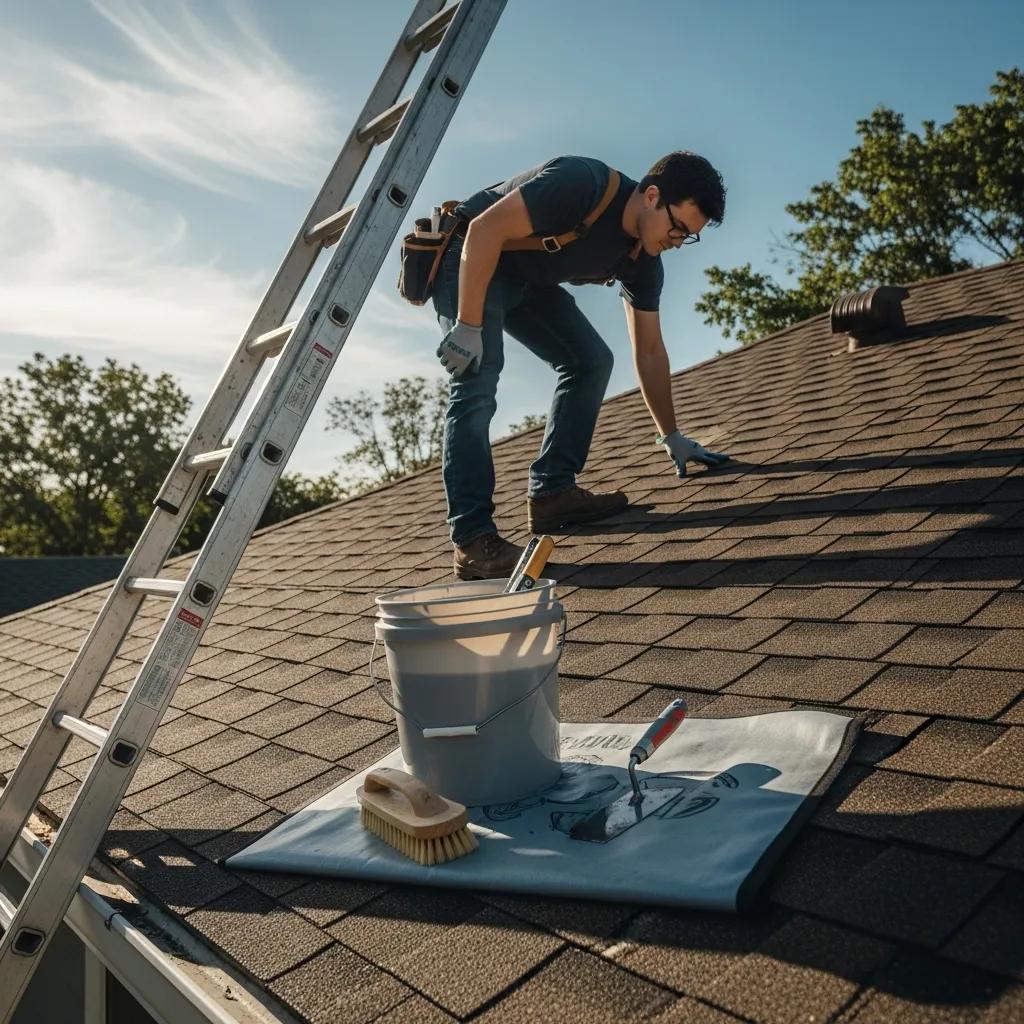
Roof Repair vs. Replacement in Minneapolis: The Honest Decision Framework for 2026
Every Minneapolis homeowner who spots a problem on their roof asks the same question: fix it or replace the whole thing? The contractor answers vary wildly depending on what the contractor is selling — repair shops say repair, replacement crews say replace, storm-chaser salespeople usually say replace and push insurance. None of those answers is automatically wrong, but none is automatically right either. The honest decision depends on specific variables about your roof and your situation.
This guide is the homeowner-first breakdown of the roof repair vs. replacement decision for Minneapolis homes in 2026. The four factors that should drive the call, the scenarios where each answer is clearly correct, and the gray zones where reasonable people disagree. If you want to walk into a quote conversation with a clear head instead of letting a contractor tell you what’s best, start here.
Roof repair vs. replacement in Minneapolis: the four factors that should drive the decision
The repair-vs-replacement decision in Minneapolis comes down to four factors, in rough order of weight:
- Roof age. How old is the existing roof and what’s the expected remaining life? A 5-year-old roof with a wind-damaged section almost always gets repaired; a 22-year-old roof with the same damage is often replaced.
- Damage scope. Localized (one slope, a specific component like a vent boot or chimney flashing) vs. widespread (multiple slopes, visible aging across the whole roof). Localized is repair territory; widespread is replacement territory.
- Insurance status. Is an insurance claim involved, and is the claim likely to approve replacement? If yes, the homeowner math shifts toward replacement even when repair would also work. If no, the homeowner is paying out of pocket and repair economics matter more.
- Hold horizon. Selling in 2 years vs. staying 15+. Short-hold favors repair (capture the least possible out-of-pocket). Long-hold on an older roof favors replacement (don’t invest in repairs that won’t last the full hold).
The big mistake is treating any one of these factors as the whole answer. A contractor who only asks “when was your last roof” is working from incomplete information. A homeowner who only focuses on “what’s the cheapest option right now” is often setting up a more expensive situation in 2–3 years. The right decision needs all four variables on the table. For the overall Minneapolis repair landscape, see the roof repair in Minneapolis pillar.
When repair is the clear answer in Minneapolis
Scenarios where the repair vs. replacement decision is honestly a no-brainer for repair:
- Roof under 12 years old with localized damage. A newer roof has 15+ years of remaining life. Spending $15,000–$30,000 to replace it for a $600 repair is indefensible economics.
- Single missing shingle, pipe boot failure, or minor flashing leak. These are 1-hour-to-1-day repair jobs costing $250–$900 on most Minneapolis homes. Even on an older roof, fixing the specific failure buys meaningful time.
- One chimney flashing issue on an otherwise healthy roof. Chimney re-flash is a contained repair; you can do it without re-roofing the rest of the home.
- Short hold horizon (selling within 3 years). Even on a 20-year-old roof, repair plus a modest inspection-documented condition is usually better economics than a full replacement you won’t recoup in the sale price.
- Out-of-pocket homeowner with no insurance trigger. When no storm event is creating a claimable loss, repair often wins the cost math on roofs under 18 years old.
For specific repair types, see roof leak repair, missing shingle repair, roof flashing repair, and chimney leak repair in Minneapolis. For cost detail, roof repair cost in Minneapolis.
When replacement is the clear answer in Minneapolis
The inverse scenarios — where replacement is honestly the right call and repair is a money-trap:
- Roof age 22+ years with visible widespread aging. Granule loss across multiple slopes, curled or brittle shingles, bald spots, and more than one failure area. Repair patches into this roof won’t last because the surrounding shingles are failing too.
- Damage affecting more than 25–30% of the total roof surface. Once you’re repairing that much area, materials and labor economics start matching full replacement — and you still have an old roof on the sections you didn’t touch.
- Insurance-approved storm claim for full replacement. If the carrier has approved full replacement under an insurance claim, the homeowner essentially pays the deductible and gets a new roof. Declining in favor of repair rarely makes sense. See the Minneapolis storm damage claim pillar.
- Failing decking or persistent ventilation-driven failures. When the underlying structure is compromised, repairs fix symptoms and the disease returns. Full tear-off with decking replacement and ventilation updates addresses the root cause. See the roof decking discussion for the substrate angle.
- Long-hold horizon on an aging roof. Planning to stay 15+ years on a 20-year-old roof? You’re replacing anyway within 5 years. Replacing now avoids the sequence of small repairs that pile up between now and the inevitable.
For total cost context on the replacement side, see the Minneapolis roof replacement cost pillar. For the material decision during replacement, the Minneapolis roofing materials pillar.
The repair vs. replacement call gets harder, not easier, as more storm events pile up in a Minneapolis homeowner’s memory. After the third spring of repair calls, most homeowners want certainty more than they want optimization. Full replacement provides that certainty. If the repair economics are close — say, within 25% on total spend over a 10-year horizon — homeowners generally sleep better with replacement. That’s a legitimate, non-financial factor that deserves weight in the decision.
— Paraphrased from a 2024 National Association of Home Builders homeowner behavior briefing
The gray zone: when reasonable people disagree
There’s a meaningful zone where the decision isn’t obvious, and reasonable contractors will give different answers. Typical gray-zone scenarios in Minneapolis:
- 15–18 year old roof with moderate damage. Not obviously too old; not clearly still healthy. Both a $2,500 repair and a $22,000 replacement are defensible. What tips the call: hold horizon, upcoming storm season, available capital, and insurance status.
- Second storm event on a previously-repaired roof. First claim paid for repairs; now second claim has a similar scope. Some homeowners repair again; some convert to full replacement. Insurance carriers sometimes push for replacement on repeat claims.
- Cosmetic vs. functional damage. Hail bruising that affects appearance but not immediate waterproofing. Insurance may cover it, may not. Repair is possible; replacement is possible; leaving it alone is also possible.
- Partial insurance approval. Claim approves one slope of a 4-slope roof. Accepting partial replacement creates matching issues (see Minnesota Statute 65A.28). Some homeowners accept partial; some push for full replacement under matching rules. See the Minneapolis storm damage claim pillar.
- Home on the market now. The roof is the biggest single sale-blocking item but a full replacement is expensive and won’t fully recoup at sale. Repair plus disclosure, repair plus buyer credit, and full replacement are all valid paths.
In these gray-zone scenarios, the honest best-practice is to get 2–3 estimates, ask each contractor to write down why they recommend repair or replacement, and compare the reasoning. The answer isn’t obvious to the pros either, but their reasoning (or lack of it) tells you which contractor you trust. For contractor selection, see the Minneapolis roofing companies pillar. For the specific replacement categories of wind and hail damage, wind damage roof repair in Minneapolis and hail damage roof repair in Minneapolis. Further reading: the NRCA consumer center, the ARMA asphalt roofing resource, and the IBHS FORTIFIED roofing standards.
Frequently Asked Questions
How do I know if my Minneapolis roof needs repair or replacement?
Weigh four factors: roof age (under 12 years = repair; 22+ years = usually replacement), damage scope (localized = repair; 25–30%+ of roof = replacement), insurance status (approved claim for full replacement = replace), and hold horizon (short = repair; long with old roof = replace). The best decision weighs all four, not just one.
How long does a Minneapolis roof repair last before I’ll need replacement anyway?
Depends on the repair type and underlying roof condition. Pipe boot replacement with lead or steel boots: life of the roof. Shingle repair on a 5-year-old roof: 20+ years. Patch on a 20-year-old roof: 3–5 years typical. The underlying roof age caps how long any repair meaningfully extends the system.
Is it ever cheaper to replace a Minneapolis roof than to keep repairing it?
Yes. Once you’re spending more than 25% of replacement cost on cumulative repairs over a 3-year window, replacement is usually the better economic call. Repeat repairs on an aging roof also carry disruption and uncertainty costs that don’t show up on invoices.
If insurance approves full replacement, can I take repair instead?
Yes, but it rarely makes sense. The homeowner pays roughly the deductible either way. Choosing repair when replacement is approved forfeits the new-roof benefit and leaves you responsible for the rest of the roof’s eventual replacement out of pocket. Exceptions exist (short-hold properties, pending sale), but they’re narrow.
Can I get a second opinion on my Minneapolis roof repair vs. replacement recommendation?
Absolutely, and you should. Get 2–3 licensed Minnesota contractor estimates, ask each to write down their reasoning, and compare. Where reasoning is vague or the recommendation conveniently matches what the contractor sells, that’s a flag. Where reasoning is specific and consistent across contractors, that’s a signal to trust.
Looking for a Minneapolis roofer who will tell you honestly whether to repair or replace?
We’re Minneapolis Roofing Company — a licensed, insured, local crew that handles everything from small leak repairs to full tear-offs across the Minneapolis metro. If you’re looking for a Minneapolis roofer who will tell you honestly whether to repair or replace, we’d love to be the name you recommend to your neighbor after the work is done.
